


Asclera® Injections for Spider Veins in Mason, Ohio
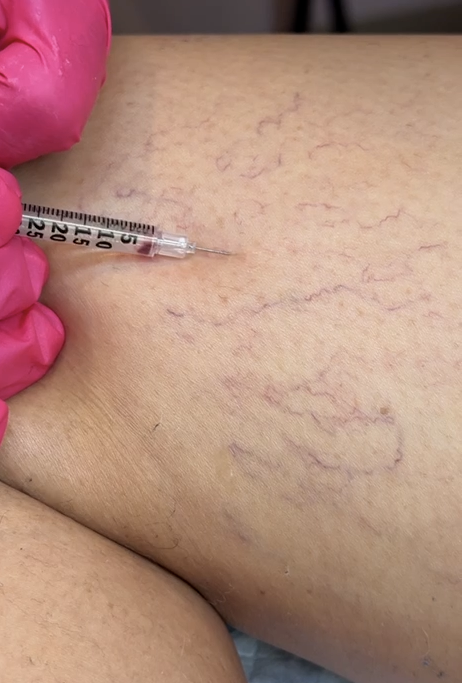
Regenerative Aesthetics offers Asclera® injections for spider veins in Mason, Ohio for patients seeking treatment of appropriate small visible veins on the legs.
Asclera® contains polidocanol, an FDA-approved sclerosing agent indicated for uncomplicated spider veins measuring 1 mm or less in diameter and uncomplicated reticular veins measuring 1 to 3 mm in diameter in the lower extremities.
During sclerotherapy, Asclera® is carefully injected into the selected vein. The medication acts on the inner lining of the vessel, leading the treated vein to close and gradually become less visible.
Treatment is personalized according to the size, pattern, and location of the veins as well as your medical history and individual treatment goals.
Regenerative Aesthetics welcomes patients from Mason, Cincinnati, West Chester, Deerfield Township, and surrounding Southwest Ohio communities.
What Is Asclera®?
Asclera® is the brand name for polidocanol injection, a prescription sclerosing medication used to treat selected small veins in the legs.
It is available in different concentrations depending on the size of the vein being treated. Under the FDA-approved prescribing information, Asclera® 0.5% is used for spider veins measuring 1 mm or less, while Asclera® 1% is used for reticular veins measuring 1 to 3 mm.
Asclera® is not intended to treat every type of visible leg vein. Veins larger than 3 mm, symptomatic venous disease, or more complex vascular concerns may require a different evaluation or treatment approach.
How Does Asclera® Sclerotherapy Work?
Asclera® works through a process called sclerotherapy.
When polidocanol is injected directly into an appropriate vein, it acts locally on the inner lining of the blood vessel. This causes the treated vessel to close.
As the treatment process progresses, the closed vein is replaced by fibrous connective tissue and becomes progressively less visible.
Because only selected veins are injected, treatment can be customized according to the distribution and size of the visible veins on the legs.
What Types of Veins Can Asclera® Treat?
Spider Veins
Spider veins are small superficial blood vessels that may appear as fine red, blue, or purple lines beneath the skin.
Asclera® is FDA-approved to treat uncomplicated spider veins in the lower extremities measuring 1 mm or less in diameter.
Reticular Veins
Reticular veins are slightly larger visible veins that may appear blue or green beneath the skin and can sometimes be associated with networks of smaller spider veins.
Asclera® is FDA-approved to treat uncomplicated reticular veins in the lower extremities measuring approximately 1 to 3 mm in diameter.
Veins Larger Than 3 mm
Asclera® has not been studied for varicose veins measuring more than 3 mm in diameter.
Larger, bulging, painful, or otherwise symptomatic veins should be appropriately evaluated to determine whether another vascular treatment or medical referral is more suitable.
Benefits of Asclera® Treatment
Targets Small Visible Leg Veins
Asclera® allows selected spider and reticular veins to be treated individually according to their size and location.
FDA-Approved Sclerotherapy
Polidocanol is FDA-approved for the sclerotherapy of uncomplicated spider veins measuring 1 mm or less and reticular veins measuring 1 to 3 mm in the lower extremities.
Non-Surgical Treatment
Asclera® treatment is performed through small injections directly into the selected veins and does not require surgical removal of the vein.
Gradual Improvement in Visible Veins
Following successful sclerotherapy, treated veins gradually become less visible as the vessel closes and the treatment area changes over time.
Personalized Treatment Planning
The number of veins treated and the amount of medication required vary according to the size and extent of the veins.
Some patients may require more than one treatment session to address multiple areas or groups of veins.
What Happens During an Asclera® Treatment?
Before treatment, your provider evaluates the visible veins, your medical history, previous vein treatments, medications, risk factors, and treatment goals.
During the procedure, a fine needle is used to carefully inject Asclera® directly into the selected spider or reticular veins.
Multiple individual veins may be treated during the same appointment when appropriate.
After the injections, compression is applied to the treated area. Patients are also encouraged to walk following the procedure.
Your provider will give you individualized instructions regarding compression garments, activity, and post-treatment care.
How Many Asclera® Treatments Will I Need?
The number of Asclera® treatment sessions varies from patient to patient.
Some patients may have a limited number of spider veins in one area, while others have larger networks of spider and reticular veins that require treatment over multiple sessions.
The treatment plan depends on the number of veins, their size and distribution, the amount of medication appropriate for each session, and the response to previous treatment.
Additional sessions may be recommended when necessary rather than attempting to treat every visible vein during a single appointment.
When Will Spider Veins Fade After Asclera®?
Changes following sclerotherapy are gradual rather than immediate.
The treated veins may initially remain visible and can temporarily appear darker, bruised, or more noticeable while the treatment area heals.
Over time, successfully treated veins may fade as the sclerotherapy process progresses.
The speed and degree of improvement vary according to the vein size, number of treated vessels, individual healing response, and whether additional treatment sessions are needed.
No treatment can guarantee that every visible vein will completely disappear.
What Should I Expect After Asclera® Injections?
Temporary changes around the injection sites are expected following sclerotherapy.
These may include bruising, irritation, discoloration, tenderness or pain, itching, warmth, or temporary firmness in the treated area.
Compression stockings or support hose may be recommended after treatment, and your provider will explain how long they should be worn based on the veins treated and your individual care plan.
Walking is generally encouraged after treatment and during the following days.
Carefully follow the post-treatment instructions provided by your medical team.
Compression After Asclera® Sclerotherapy
Compression is an important part of care following Asclera® treatment.
A compression stocking or bandage is applied after the injections to support the treated area. The recommended duration of compression depends on the type and extent of the veins treated.
Your provider will give you specific instructions regarding how long to wear compression garments and when they may be removed.
Walking after the procedure is also encouraged as part of the post-treatment protocol.
What Should I Avoid After Asclera®?
Follow your provider’s instructions carefully after sclerotherapy.
Patients are generally encouraged to remain mobile and walk regularly after treatment.
For the first few days following Asclera® treatment, certain activities may need to be temporarily avoided, including strenuous exercise, sunbathing, hot baths or saunas, and long-distance air travel.
Your provider may modify these instructions according to your medical history, the extent of treatment, and your individual recovery.v
Is Asclera® Safe for Everyone?
Asclera® is a prescription medical treatment and is not appropriate for every patient.
Before treatment, your provider should review your health history, medications, allergies, previous vein problems, history of blood clots, mobility, recent procedures, and other factors that may affect treatment safety.
Asclera® is contraindicated in patients with a known allergy to polidocanol and in patients with acute thromboembolic disease.
Additional caution is necessary for patients with factors that may increase the risk of venous thrombosis, including a history of deep vein thrombosis or pulmonary embolism, reduced mobility, recent major surgery, prolonged hospitalization, or pregnancy.
An individual medical evaluation is necessary before treatment.
Possible Side Effects and Risks of Asclera®
Most reactions reported in clinical studies were localized to the injection site and were generally mild.
Possible temporary reactions may include bruising, irritation, discoloration, pain or tenderness, itching, warmth, or localized changes around the treated vein.
As with any prescription sclerotherapy treatment, more serious complications are possible. These can include severe allergic reactions, venous thrombosis or pulmonary embolism, arterial complications, or tissue injury if medication is unintentionally delivered outside the intended vein or into an artery.
Your provider will review relevant risks before treatment and provide instructions about symptoms that require medical attention.
Asclera® vs. Laser Treatment for Spider Veins
Asclera® sclerotherapy and vascular laser treatments work in different ways.
Asclera® is injected directly into appropriate small leg veins to produce controlled closure of the treated vessel.
Laser and light-based treatments deliver energy through the skin and may be appropriate for certain superficial vascular concerns depending on the location, vessel size, skin characteristics, and available technology.
Neither approach is automatically appropriate for every visible vein.
A professional evaluation helps determine whether injectable sclerotherapy, a light- or laser-based treatment, another vascular procedure, or medical referral is the most appropriate option.
Who May Be a Candidate for Asclera®?
Asclera® may be considered for adults with uncomplicated spider veins or reticular veins in the lower extremities that fall within the FDA-approved treatment range.
A consultation is particularly important to distinguish small cosmetic veins from larger varicose veins or symptoms that may indicate underlying venous disease.
Your provider will evaluate the location and diameter of the veins as well as your medical history, current medications, previous vein treatments, clotting history, and other relevant risk factors before determining whether Asclera® treatment is appropriate.
Why Choose Regenerative Aesthetics for Asclera® in Mason, Ohio?
At Regenerative Aesthetics in Mason, Ohio, Asclera® treatment begins with an individualized assessment rather than a one-size-fits-all injection plan.
Our team evaluates the size, location, and pattern of visible veins together with your medical history and treatment goals before determining whether sclerotherapy is appropriate.
Because not every visible vein should be treated in the same way, careful patient selection and personalized treatment planning are an important part of our approach.
We also provide clear post-treatment instructions regarding compression, walking, recovery, and follow-up.
Regenerative Aesthetics welcomes patients from Mason, Cincinnati, West Chester, Deerfield Township, and surrounding Southwest Ohio communities.
Frequently Asked Questions About Asclera® Injections
What is Asclera®?
Asclera® is a prescription injectable medication containing polidocanol. It is used as a sclerosing agent for appropriate spider and reticular veins in the lower extremities.
What size veins can Asclera® treat?
Asclera® is FDA-approved for uncomplicated spider veins measuring 1 mm or less and uncomplicated reticular veins measuring 1 to 3 mm in diameter in the lower extremities.
Can Asclera® treat large varicose veins?
Asclera® has not been studied for varicose veins measuring more than 3 mm in diameter. Larger or symptomatic veins should be appropriately evaluated before treatment.
How does Asclera® work?
Polidocanol acts on the inner lining of the treated vein, causing the vessel to close. The closed vein is gradually replaced by fibrous connective tissue and becomes less visible over time.
How many Asclera® treatments will I need?
The number of treatment sessions depends on the number, size, and distribution of the veins and your individual response. Some patients may require more than one session.
Do I need compression stockings after Asclera®?
Compression is an important part of the post-treatment protocol. Your provider will tell you what type of compression garment to use and how long to wear it based on the veins being treated.
Can I walk after Asclera® injections?
Yes. Walking is generally encouraged immediately after the procedure and during the following days as part of the recommended post-treatment care.
Is there downtime after Asclera®?
Many normal daily activities may be resumed after treatment, but temporary bruising, irritation, discoloration, tenderness, itching, or warmth may occur. Some activities should be temporarily avoided according to your post-treatment instructions.
Can spider veins return after treatment?
Successfully treated veins may fade, but sclerotherapy does not prevent new spider or reticular veins from developing in the future. Additional treatment may be considered if new visible veins appear.
Who should not receive Asclera®?
Asclera® is contraindicated in patients with a known allergy to polidocanol and in patients with acute thromboembolic disease. Your medical history should be reviewed before treatment to identify additional risk factors.
Schedule Your Asclera® Consultation in Mason, Ohio
If visible spider or reticular veins are affecting the appearance of your legs, schedule a personalized consultation at Regenerative Aesthetics in Mason, Ohio.
Our team will evaluate the size and pattern of your veins, review your medical history and treatment goals, and determine whether Asclera® sclerotherapy is an appropriate option for you.
Regenerative Aesthetics
969 Reading Rd N
Mason, OH 45040
Phone: (513) 204-4483
Email: contact@regenspa.org