


Hormone Pellet Therapy in Mason, Ohio
Regenerative Aesthetics offers individualized hormone evaluation and hormone therapy in Mason, Ohio, including pellet-based treatment when medically appropriate.
Hormone pellets are one of several possible methods of delivering hormone therapy. Small pellets containing a prescribed hormone are placed beneath the skin, where they gradually release medication over an extended period.
Hormone therapy is not appropriate for every patient, and treatment should not be based on symptoms alone. Your medical history, current symptoms, medications, relevant laboratory findings, risk factors, and treatment goals are reviewed before determining whether hormone therapy is appropriate and which delivery method should be considered.
Our goal is not to pursue a universal “optimal” hormone level, but to identify clinically appropriate treatment options based on the individual patient.
Regenerative Aesthetics welcomes patients from Mason, Cincinnati, West Chester, Deerfield Township, and surrounding Southwest Ohio communities.
Hormone Therapy for Women and Men
What Is Hormone Pellet Therapy?
Hormone pellet therapy is a long-acting method of hormone delivery in which a small pellet is placed beneath the skin during an office procedure.
Depending on the specific medication and clinical indication, the pellet gradually releases hormone into the body over an extended period.
Pellet therapy differs from tablets, patches, gels, creams, and injections because the medication remains implanted after placement rather than being administered daily or weekly.
This convenience also requires careful patient selection. Once a pellet has been inserted, the dose cannot be adjusted from day to day in the same way as many other hormone formulations.
The specific hormone, formulation, dose, treatment interval, and monitoring plan should be determined individually by a qualified medical provider.
What Does “Bioidentical Hormone” Mean?
The term “bioidentical” describes hormones that are chemically identical to hormones produced naturally by the human body.
However, “bioidentical” does not automatically mean safer, more effective, more natural, or FDA-approved.
Some FDA-approved hormone medications contain hormones that are chemically identical to those produced by the body. Other bioidentical hormone preparations are compounded by pharmacies for individual patients and are not FDA-approved.
Understanding the exact medication and formulation being prescribed is therefore an important part of informed treatment planning.
Hormone Therapy for Women
Hormone therapy may be considered for appropriate women experiencing certain symptoms related to menopause or other diagnosed hormonal conditions.
Symptoms such as hot flashes, night sweats, sleep disruption, and genitourinary symptoms may be associated with the menopausal transition, but treatment selection depends on the individual patient's symptoms, medical history, age, risk factors, and treatment goals.
Multiple FDA-approved hormone formulations are available for menopausal hormone therapy. Pellet-based or compounded treatment should be discussed in the context of these available alternatives and their respective benefits and risks.
Testosterone Therapy for Men
Testosterone therapy may be considered for men with symptoms and signs consistent with testosterone deficiency together with consistently low testosterone concentrations confirmed through appropriate testing.
Symptoms alone do not establish a diagnosis of hypogonadism. Low testosterone should be confirmed and its possible cause evaluated before replacement therapy is initiated.
When testosterone therapy is appropriate, several delivery methods may be available, including long-acting testosterone pellets in selected patients.
Hormone Therapy Is Individualized
The same symptoms can have many different causes. Fatigue, sleep changes, reduced libido, changes in body composition, mood changes, and difficulty concentrating are not specific to hormone deficiency.
A medical evaluation helps determine whether symptoms are related to a hormonal condition or whether another cause should be investigated.
Hormone therapy should begin with an individualized medical assessment rather than with treatment based on age or symptoms alone.
Your evaluation may include a review of symptoms, medical history, current medications and supplements, reproductive history when relevant, previous hormone therapy, cardiovascular and cancer risk factors, sleep and lifestyle factors, and other health conditions.
Laboratory testing may also be appropriate depending on the clinical situation.
For men being evaluated for testosterone deficiency, current clinical guidance recommends confirming consistently low testosterone concentrations rather than relying on a single measurement.
For women experiencing menopausal symptoms, treatment decisions are based on the overall clinical picture. Hormone testing is not used simply to pursue a predetermined “optimal” hormone number.
The purpose of evaluation is to determine whether hormone therapy is medically appropriate, identify potential contraindications, and select a treatment approach with an acceptable benefit-risk profile.
Potential Advantages and Important Considerations of Hormone Pellets
Long-Acting Hormone Delivery
Hormone pellets are designed to release medication gradually over an extended period after implantation.
This can reduce the need for daily application or frequent administration compared with some other hormone-delivery methods.
No Daily Application
Once a pellet is inserted, patients do not need to remember a daily tablet, cream, or gel for that particular hormone formulation.
Convenience should be considered together with safety, treatment goals, available alternatives, and the ability to adjust therapy.
Individualized Treatment Planning
Hormone treatment should be selected according to the individual medical indication, symptoms, health history, laboratory findings when appropriate, and response to therapy.
Limited Dose Flexibility After Insertion
Unlike a tablet, patch, gel, or other treatment that can often be stopped or adjusted promptly, an implanted pellet continues releasing hormone after placement.
This is an important consideration when comparing pellet therapy with other hormone-delivery options.
Ongoing Medical Monitoring
Follow-up is an important part of hormone therapy. Monitoring allows your provider to evaluate symptoms, treatment response, possible adverse effects, and relevant laboratory or clinical findings.
How Is a Hormone Pellet Inserted?
Hormone pellet placement is performed as an office procedure.
After the treatment area is prepared, local anesthetic is used. A small incision is made, and the prescribed pellet or pellets are placed beneath the skin through the incision.
The insertion site is then closed and covered according to the provider’s protocol.
Your provider will give you specific post-procedure instructions regarding wound care, bathing, exercise, and other activities while the insertion site heals.
Because the procedure involves an incision, temporary tenderness, bruising, swelling, bleeding, irritation, or discomfort may occur around the insertion site.
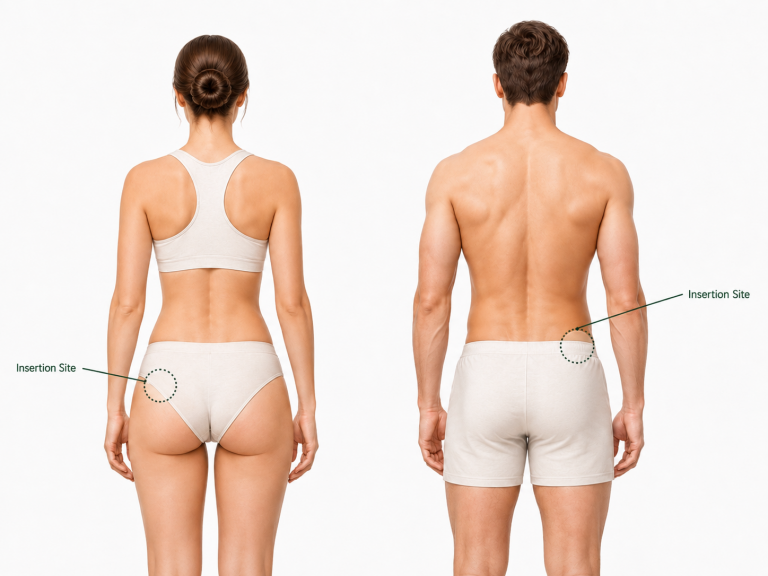
Where Are Hormone Pellets Placed?
Hormone pellets are implanted in subcutaneous tissue rather than injected into a muscle or vein.
The specific placement site depends on the prescribed product, treatment protocol, anatomy, previous insertions, and individual clinical considerations.
Your provider will discuss the planned insertion area before the procedure and provide instructions for caring for the site afterward.
How Long Do Hormone Pellets Last?
Hormone pellets are intended to provide long-acting hormone delivery, but there is no single duration that applies to every patient or every pellet formulation.
How long treatment remains clinically effective can vary according to the hormone used, product, dose, individual metabolism, medical indication, and patient response.
Follow-up should therefore be based on clinical response and appropriate medical monitoring rather than automatically scheduling every patient on the same reinsertion interval.
Your provider will determine whether and when additional treatment should be considered.
What Happens After Hormone Pellet Placement?
After pellet insertion, you will receive instructions for caring for the treatment site.
Temporary tenderness, bruising, swelling, or minor bleeding may occur around the insertion area.
Activity restrictions may be recommended for a short period to allow the incision to heal properly. Follow the specific instructions provided by your medical team rather than relying on a universal recovery schedule.
Hormonal effects do not necessarily appear immediately, and individual response varies.
Follow-up is used to evaluate how you are feeling, identify possible adverse effects, and determine whether additional clinical or laboratory monitoring is appropriate.
Monitoring During Hormone Therapy
Hormone therapy requires ongoing medical follow-up.
Monitoring depends on the hormone being used, the reason for treatment, your age, medical history, other medications, treatment response, and individual risk factors.
For testosterone therapy in men, monitoring may include symptoms, serum testosterone, hematocrit, and appropriate prostate-risk assessment.
For women receiving menopausal hormone therapy, follow-up includes evaluation of symptom response, adverse effects, bleeding patterns when relevant, and changes in medical risk factors.
Contact your provider if you develop new or concerning symptoms rather than waiting until the next scheduled pellet treatment.
Possible Side Effects and Risks of Hormone Therapy
All forms of hormone therapy have potential side effects and risks, and the risk profile depends on the specific hormone, dose, route of administration, medical indication, and individual patient.
Estrogen therapy may be associated with risks that include blood clots, stroke, gallbladder disease, and, depending on the treatment regimen and patient characteristics, certain cancer risks. In a patient with a uterus, systemic estrogen therapy generally requires consideration of appropriate endometrial protection.
Testosterone therapy may cause adverse effects such as acne, changes in hair growth, increased red blood cell production, changes in fertility, and other androgen-related effects. Monitoring is necessary during treatment.
Pellet insertion also carries procedure-related risks including bruising, bleeding, infection, discomfort, scarring, or problems at the insertion site.
Your individual benefits and risks should be reviewed before treatment begins.
Hormone Therapy and the Uterus
For women with an intact uterus, the type of hormone therapy prescribed requires particular attention.
Systemic estrogen without adequate endometrial protection can increase the risk of endometrial hyperplasia and endometrial cancer.
When systemic estrogen therapy is appropriate for a patient with a uterus, your medical provider will determine whether a progestogen or another appropriate form of endometrial protection is needed.
Any unexpected or postmenopausal vaginal bleeding should be reported and appropriately evaluated.
Hormone Therapy and Fertility
Hormone therapy can affect reproductive function.
In men, external testosterone can suppress sperm production and may significantly reduce fertility. Men who are planning fertility should discuss this before beginning testosterone replacement.
Women who are pregnant, planning pregnancy, or may become pregnant should discuss hormone therapy with their medical provider before treatment.
Reproductive goals are therefore an important part of the medical history before initiating hormone therapy.
Who May Not Be an Appropriate Candidate for Hormone Pellet Therapy?
Hormone pellet therapy is not appropriate for every patient.
Treatment suitability depends on the specific hormone being considered, medical indication, personal and family medical history, current medications, reproductive plans, cardiovascular risk, cancer history, clotting history, and other clinical factors.
Certain hormone therapies may be inappropriate or require specialist evaluation in patients with hormone-sensitive cancers, unexplained vaginal bleeding, significant thromboembolic risk, certain cardiovascular conditions, pregnancy, or other relevant medical concerns.
Testosterone therapy also has specific contraindications and monitoring requirements.
A medical consultation is necessary to determine whether hormone treatment is appropriate and whether a pellet is preferable to another delivery method.
FDA-Approved vs. Compounded Hormone Pellets
Not all hormone pellets have the same regulatory status.
FDA-approved testosterone pellets are available for specific medical indications in men. For example, TESTOPEL® is an FDA-approved prescription testosterone pellet for appropriate patients with certain conditions associated with testosterone deficiency.
Compounded hormone pellets are different. Compounded medications are prepared by compounding pharmacies for individual patients and are not FDA-approved products. They do not undergo the same FDA premarket review for safety, effectiveness, quality, or labeling as an FDA-approved medication.
For menopausal hormone therapy, FDA-approved estrogen and progesterone formulations are available, including products containing hormones that are chemically identical to hormones naturally produced by the body.
Patients should know whether the product being recommended is FDA-approved or compounded and should discuss the reasons for selecting that formulation with their medical provider.
Hormone Pellets vs. Other Hormone Therapy Options
Pellets are only one way of delivering hormone therapy.
Depending on the hormone and medical indication, alternatives may include oral medications, transdermal patches, gels, creams, vaginal preparations, injections, or other FDA-approved formulations.
Different routes have different advantages, risks, dosing flexibility, pharmacokinetics, and monitoring requirements.
One important difference is that many non-pellet formulations can be adjusted or discontinued more easily if symptoms, side effects, or medical circumstances change.
Treatment selection should therefore be based on shared medical decision-making rather than assuming that one delivery method is best for every patient.
Hormone Pellet Therapy for Menopause
Menopausal hormone therapy can be highly effective for appropriate patients with bothersome vasomotor symptoms such as hot flashes and night sweats, and specific hormonal treatments may also be used for genitourinary symptoms.
However, the route and formulation matter.
Multiple FDA-approved menopausal hormone therapies are available. Major professional organizations recommend FDA-approved formulations over compounded bioidentical hormone therapy when an appropriate approved option exists.
If a compounded pellet is being considered, the patient should understand its regulatory status, available alternatives, potential benefits and risks, and the fact that the dose cannot be easily adjusted after implantation.
Treatment decisions should be individualized through shared decision-making with a medical provider.
Testosterone Pellet Therapy for Men
Testosterone pellet therapy may be one treatment option for appropriately diagnosed male hypogonadism.
A diagnosis should be based on compatible symptoms and signs together with consistently low testosterone concentrations confirmed through appropriate laboratory testing.
Low testosterone can have different causes, and additional evaluation may be necessary before replacement therapy begins.
If testosterone replacement is appropriate, the available delivery options, including pellets, injections, gels, patches, and other formulations, can be discussed according to individual medical needs, preferences, risks, and monitoring requirements.
Treatment aims to address clinically diagnosed testosterone deficiency rather than simply raising testosterone to the highest possible level.
Why Choose Regenerative Aesthetics for Hormone Evaluation in Mason, Ohio?
At Regenerative Aesthetics, hormone care begins with medical evaluation rather than a standardized hormone package.
Our approach considers your symptoms, medical history, current medications, relevant laboratory findings, previous treatments, risk factors, and personal goals before determining whether hormone therapy is appropriate.
When hormone treatment is indicated, available delivery options can be reviewed so that the potential benefits, limitations, risks, and monitoring requirements are understood before treatment begins.
Ongoing follow-up allows the treatment plan to be reassessed as symptoms, health status, laboratory findings, or individual needs change.
Regenerative Aesthetics welcomes patients from Mason, Cincinnati, West Chester, Deerfield Township, and surrounding Southwest Ohio communities.
Frequently Asked Questions About Hormone Pellet Therapy
What is hormone pellet therapy?
Hormone pellet therapy is a long-acting method of hormone delivery in which a prescribed pellet is implanted beneath the skin and gradually releases hormone over an extended period.
Are hormone pellets bioidentical?
Some hormone pellets contain hormones that are chemically identical to hormones produced by the human body. However, the term “bioidentical” does not indicate whether a medication is FDA-approved or compounded, and it does not mean that the treatment is automatically safer.
Are all hormone pellets FDA-approved?
No. FDA-approved testosterone pellets exist for specific indications, while many customized hormone pellets are compounded medications and are not FDA-approved products. Ask your provider about the exact product being considered.
How long do hormone pellets last?
Hormone pellets are designed for long-acting delivery, but duration varies according to the product, hormone, dose, individual metabolism, medical indication, and treatment response.
Can the pellet dose be changed after insertion?
An implanted pellet continues releasing hormone after placement, so the dose cannot be adjusted from day to day as easily as many oral, transdermal, or injectable hormone therapies.
Do I need blood tests before hormone pellet therapy?
Testing depends on the hormone and clinical situation. For men being evaluated for testosterone deficiency, consistently low testosterone should be confirmed with appropriate laboratory testing. Evaluation of menopausal symptoms in women is based on the overall clinical picture, with laboratory testing used when clinically appropriate.
Can hormone pellets help menopause symptoms?
Hormone therapy can be effective for selected menopause symptoms, but several FDA-approved formulations are available. Pellet therapy is not automatically the preferred treatment, and the available options should be discussed with your medical provider.
Can men receive testosterone pellets?
Testosterone pellets may be considered for appropriate men with clinically diagnosed testosterone deficiency. Symptoms and consistently low testosterone concentrations should be evaluated before treatment.
Is hormone pellet therapy safe?
Hormone therapy has potential benefits, side effects, and risks that vary according to the hormone, dose, delivery method, medical indication, and individual patient. Pellet placement also carries procedure-related risks. An individualized medical evaluation is necessary before treatment.
Does hormone therapy cause weight loss?
Hormone pellet therapy should not be presented as a weight-loss treatment. Body weight can be influenced by many factors, including nutrition, activity, sleep, medications, metabolic health, age, and hormonal conditions. Weight-management concerns should be evaluated separately.
Will hormone pellets improve energy or libido?
Some symptoms may improve when an appropriately diagnosed hormone deficiency or menopausal condition is effectively treated, but fatigue and changes in libido have many possible causes. Improvement cannot be guaranteed and treatment should be based on an appropriate medical indication.
What are the alternatives to hormone pellets?
Depending on the hormone and medical indication, alternatives may include FDA-approved tablets, patches, gels, creams, vaginal preparations, injections, or other formulations. Your provider can discuss which options are appropriate for your situation.
Schedule a Hormone Therapy Consultation in Mason, Ohio
If you are experiencing symptoms that may be related to menopause, testosterone deficiency, or another hormonal condition, schedule a personalized consultation at Regenerative Aesthetics in Mason, Ohio.
Our team will review your symptoms, medical history, medications, relevant laboratory findings, risk factors, and treatment goals to determine whether hormone therapy is appropriate and whether pellet therapy or another treatment option should be considered.
Regenerative Aesthetics
969 Reading Rd N
Mason, OH 45040
Phone: (513) 204-4483
Email: contact@regenspa.org